A Child Remembered Through Time
Few stories feel as delicate as Fanny Ann Forrest’s, and I am fascinated to the tiny threads of history that preserve lives otherwise lost to time. Born in Hernando, Mississippi, on February 5, 1849, Frances Ann Forrest lived for just five years before dying in Memphis, Tennessee, on June 27, 1854. Even though her life was short, it lingers like a dimly lit picture that won’t go away.
Family memories, early photography, and the silent burden of loss experienced by those who loved her are how she is remembered rather than her accomplishments or written words. Her story reflects the fragility of a generation in a century when childhood sickness frequently struck quickly and mercilessly.
Early Life in a Growing Household
When I imagine Fanny Ann’s early years, I picture a household in motion. Her father, Nathan Bedford Forrest, was building his fortune through trade, land, and business ventures. Her mother, Mary Ann Montgomery Forrest, managed the home, anchoring the family in a world that was anything but stable.
Fanny Ann was the younger of two children. Her brother, William Montgomery Bedford Forrest, known as Willie, had been born in 1846. By the time she arrived, the family had already begun to climb socially and economically, moving toward Memphis, a growing city shaped by commerce and river trade.
Life for a child in the early 1850s was simple in structure but uncertain in outcome. There were no guarantees of survival, no reliable treatments for disease. Every day was a small victory.
The Photographs That Outlived Her
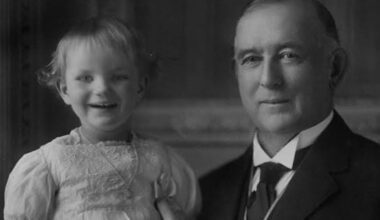
What fascinates me most are the images that remain. Two daguerreotypes capture her presence in a way words never could. In one, taken around 1852, she is about three years old. Her gaze is steady, almost curious, as if she senses the importance of the moment.
These early photographs feel like windows into a silent world. They do not tell stories outright, but they invite interpretation. I see a child dressed carefully, positioned deliberately, and preserved in silver and light.
Another image shows her with her brother. It is a reminder that she was not alone, that her life was woven into the daily rhythms of a family that would continue long after she was gone.
Illness and Death in a Vulnerable Era
By June 1854, that fragile thread of life came to an end. Fanny Ann died in Memphis at the age of five. The exact cause remains uncertain. Scarlet fever is often cited, though some accounts suggest typhoid fever or even cholera.
When I consider the time period, I realize how common such losses were. Epidemics moved through cities like Memphis with quiet efficiency. Children were especially vulnerable, their lives often measured in seasons rather than years.
Her death was not unusual for the era, yet it was deeply personal for her family. Loss on that scale reshapes a household. It leaves spaces that cannot be filled.
Burial and a Lasting Place in Memphis
Fanny Ann was laid to rest in Elmwood Cemetery in Memphis. Her grave remains there, in Chapel Hill Circle, a fixed point in a world that has changed dramatically since the 1850s.
What strikes me is that while her parents’ remains were later moved and reburied elsewhere, hers stayed. There is something quietly powerful about that. It anchors her story to one place, one patch of ground that still bears her name.
Nearby lie other figures connected to the region’s history, but her presence feels different. She represents not power or legacy, but innocence interrupted.
Her Father Nathan Bedford Forrest
To understand Fanny Ann’s place in history, I have to look at her father. Nathan Bedford Forrest was born in 1821 and rose from modest beginnings to become a wealthy businessman and later a Confederate lieutenant general.
His life was marked by ambition, conflict, and controversy. He built wealth through trade and land, and later through slave trading in Memphis. During the Civil War, he became known as a skilled cavalry commander.
Yet behind that public image was a private life shaped by family. Accounts suggest that Fanny Ann’s death affected him deeply. He rarely spoke of her afterward, as though the memory was too heavy to carry aloud.
Her Mother Mary Ann Montgomery Forrest
Mary Ann, born in 1826, stands in my mind as a figure of quiet strength. She married Nathan in 1845 and managed the household through years of change and upheaval.
After Fanny Ann’s death, she continued raising Willie and later helped care for grandchildren. Her life stretched far beyond that early loss, yet I imagine the memory of her daughter remained close, like a shadow that never fully disappears.
Her Brother Willie and the Family Line
Her older brother, Willie Forrest, lived to adulthood and continued the family name. He was born in 1846 and served as a youthful aide to his father during the Civil War.
He made it through combat, injuries, and the changing postwar South. He got married, had kids, and created a life that went much beyond his sister’s brief lifespan.
The Forrest lineage carried on through him, giving birth to grandchildren and great-grandchildren who would pass on the name to future generations.
A Larger Family Network
Fanny Ann’s story is also tied to a broader family network. Her father had many siblings, including a twin sister named Fanny who died young. It is likely that Fanny Ann was named in her memory, creating a quiet echo across generations.
The Forrest family experienced repeated losses from illness, especially during the 1830s. Typhoid fever claimed several siblings. This pattern of loss forms a backdrop to Fanny Ann’s own brief life.
It reminds me that her story is not isolated. It is part of a larger narrative of survival, hardship, and resilience.
A Life Without Records Yet Not Without Meaning
What I find most striking is the absence of personal records. There are no letters, no diaries, no documented stories in her own voice. Her life is reconstructed entirely through the records of others.
And yet, she is not invisible. The photographs, the grave, the mentions in family histories all keep her present in a subtle way.
Her life feels like a whisper in a crowded room. Easy to miss, yet impossible to erase completely.
Timeline of Key Moments
| Date | Event |
|---|---|
| February 5, 1849 | Birth in Hernando, Mississippi |
| 1852 | Daguerreotype portrait taken at about age 3 |
| Early 1850s | Family resides in Memphis area |
| June 27, 1854 | Death in Memphis at age 5 |
| 1854 | Burial in Elmwood Cemetery |
FAQ
Who was Fanny Ann Forrest
I understand her as a young child from the mid nineteenth century, the only daughter of Nathan Bedford Forrest and Mary Ann Montgomery Forrest, remembered through family history and early photography.
How did Fanny Ann Forrest die
The exact cause is uncertain, but I see repeated references to scarlet fever, with other possibilities including typhoid fever or cholera, all common and often fatal illnesses of that era.
Where is she buried
She rests in Elmwood Cemetery in Memphis, Tennessee, where her grave remains in the family plot.
Did she have any siblings
Yes, she had one older brother, William Montgomery Bedford Forrest, who survived into adulthood and continued the family line.
Why is she still remembered today
Her memory endures through her connection to a historically significant family, the survival of early photographs, and the enduring human interest in lives that ended too soon.