Who Is Jeanne Kerr Taylor
When I look at the story of Jeanne Kerr Taylor, I see a life defined less by public recognition than by a private decision to keep caring when circumstances made caring difficult.
Jeanne Kerr Taylor, also known in earlier accounts as Jeanne Kerr or Jeannie Kerr, became known through the remarkable life story of Regina Louise. Long before Regina became an author, motivational speaker, child advocate, and foster care educator, she was a vulnerable teenager moving through the California child welfare system. Jeanne was one of the adults who saw something different in her.
In the mid 1970s, Jeanne worked at the Edgar Children’s Shelter in Martinez, California. She was a young woman, about 31 years old when the pivotal events began, and she formed a close relationship with Regina, who was around 13. Regina had already experienced abandonment, neglect, abuse, and repeated disruptions in her childhood.
Jeanne did not simply provide routine supervision. She became emotionally invested in the girl in her care. She took Regina to ballet performances, the opera, dinners, and family gatherings. She introduced her to experiences that suggested a larger world existed beyond shelters and temporary placements.
To Regina, these gestures became much more than outings. They became evidence that she mattered.
Jeanne Kerr Taylor and Regina Louise
The relationship between Jeanne and Regina is the heart of this family story.
Regina Louise was born on May 2, 1963, in Austin, Texas. Her childhood was marked by instability before she entered the formal California foster care system. By the time she met Jeanne at the Edgar Children’s Shelter, she had already learned that adults could disappear from her life without warning.
Jeanne offered something that Regina desperately needed: consistency.
She encouraged Regina, listened to her, and tried to protect the young girl from a system that often interpreted her behavior through the narrow lens of discipline and institutional control. Jeanne believed there was a capable, intelligent person beneath the difficult circumstances surrounding Regina.
The relationship became so important that Jeanne eventually sought to adopt her.
That effort failed.
During the late 1970s, the court denied Jeanne’s petition to adopt Regina. Race was an important part of the historical context. At the time, transracial adoption was deeply controversial, and some child welfare professionals favored placing Black children with Black families. Jeanne was also viewed by some authorities as unsuitable for other reasons.
After the petition was rejected, contact between Jeanne and Regina was restricted. Jeanne continued writing letters, but many did not reach Regina. The separation became one of the most painful chapters in Regina’s life.
Regina subsequently experienced more than 30 foster homes, group homes, and psychiatric facilities.
Yet the memory of Jeanne survived.
A Childhood Bond That Refused to Disappear
One of the most striking elements of this story is how a relationship formed during a relatively short period could remain emotionally powerful for decades.
Jeanne had given Regina tangible memories of belonging. There were photographs, family visits, gifts, meals, cultural experiences, and ordinary moments that felt extraordinary to a child who had rarely experienced dependable affection.
One memorable detail from Regina’s accounts is a handmade blue dress decorated with rainbows and hearts. Objects such as this can become emotional anchors. For Regina, memories of Jeanne represented a version of childhood in which someone wanted her to feel special.
The separation did not erase the relationship. It placed it behind a locked door.
For years, neither woman knew whether that door would ever open again.
Jeanne Kerr Taylor Builds a Family of Her Own
Jeanne’s life took a different turn after the split.
She later became Jeanne Taylor after marrying a member of the armed forces. Due of her husband’s military career, he had to relocate frequently, including to Alabama. Christopher Taylor is the couple’s biological son.
Jeanne’s career changed as well. She double majored in psychology and nursing and graduated from Sacramento State College in 1968. Her early work with youngsters was followed by jobs teaching computer software and doing administrative analysis.
A distinct type of supporting role was seen in her later career. She concentrated on teaching and mentoring computer users and assisting people with software and technology rather than working directly with children in a shelter.
Additionally, she started performing community service, such as volunteering for White Pony Express in Contra Costa County.
As a result, her life evolved in a number of contexts, including nursing and psychology, child counseling, military family life, teaching technology, and helping in the community.
The Search That Changed Everything in 2003
The story might have ended with two people carrying separate memories of one another.
It did not.
In 2003, Regina published her memoir Somebody’s Someone. The book described her childhood and the adults who had shaped her life, including Jeanne.
A former coworker of Jeanne recognized details in Regina’s story and helped locate her.
Jeanne was living in Alabama at the time. When contact was finally established, the decades of separation suddenly narrowed to an email, a telephone call, and eventually an in-person reunion.
One of Jeanne’s messages to Regina captured the emotion of the moment: “I am so proud of you, sweetheart.”
The reunion was not simply a meeting between two former acquaintances. It was the reopening of a mother-daughter relationship that both women had carried for years.
They shared memories and photographs. They talked about the past. They discovered how much had changed and how much had remained remarkably intact.
The 2003 Adult Adoption
On November 20, 2003, the relationship became legally recognized.
Jeanne Kerr Taylor adopted Regina Louise as an adult in the same Contra Costa County courthouse where the earlier adoption attempt had been denied decades before.
Regina was 41. Jeanne was approximately 59.
The symbolism was powerful. A courthouse that had once represented separation now became the setting for legal family formation.
Regina took the surname Kerr Taylor, becoming Regina Louise Kerr Taylor.
The adult adoption was not primarily about childhood custody or financial planning. It represented the formal recognition of a bond that had survived years of separation.
Family members were present at the hearing and affirmed their support for the relationship. In that moment, the family was not being created from nothing. It was giving legal language to something that had already existed emotionally for decades.
Christopher Taylor and the Expanded Family
The biological son of Jeanne, Christopher Taylor, played a significant role in this extended family narrative.
Christopher was about 23 years old at the time of the adult adoption, having been born in 1980. He was there at the 2003 court proceeding and took part in Regina’s family’s acknowledgement.
His presence was important since Regina and Jeanne’s reunion was more than just a solitary affair. She was joining a family that had grown throughout the years she and Jeanne had been apart.
That distinction is crucial.
Regina had been looking for a permanent family for a large portion of her life. She was embraced as an adult not only by Jeanne but also by her husband and son.
Jeanne’s Husband and the Family Circle
Jeanne’s husband, whose public identity has remained largely private, was a military serviceman. During the period surrounding the reunion, he was stationed in Iraq.
Jeanne consulted him before moving forward with the adult adoption, demonstrating that the decision was understood as a family commitment rather than an individual act.
He later attended the adoption hearing alongside Christopher and other members of the family.
His limited public profile reflects something consistent throughout Jeanne’s story. The family has generally valued the substance of their relationships more than public attention.
Michael and Stevie Anne
Regina’s son Michael was also present when the adult adoption took place. At about 17 years old, he witnessed the formal expansion of his family and the recognition of Jeanne as his grandmother by adoption.
Stevie Anne, Regina’s partner at the time, was also present and affirmed the family relationships.
These details make the 2003 hearing feel less like a legal proceeding and more like a gathering of people acknowledging that their lives had become connected.
The family tree was changing, but the change was emotional as much as legal.
Life After the Adoption
Following the adoption, Jeanne and Regina remained connected and lived near one another in the Bay Area for periods of time. Accounts have described them living only about a block apart in Walnut Creek at one point.
They shared holidays and ordinary family experiences, allowing Jeanne to participate in Regina’s adult life in ways that had been impossible during Regina’s childhood.
For Regina, the relationship represented a long-awaited sense of permanence.
For Jeanne, it offered an opportunity to resume a relationship that had been interrupted when Regina was still a teenager.
The years apart could never be recovered, but they did not have to define the rest of their lives.
Jeanne Kerr Taylor’s Private Life
Unlike Regina, Jeanne has not built her public identity around the story.
She has maintained a deliberately low profile. Public information about her early childhood, exact birth date, finances, and private family life remains limited.
That privacy is part of what makes her story distinctive. She is not a celebrity who became famous because of the relationship. Her visibility largely comes from Regina’s decision to tell the story.
Jeanne’s publicly described achievements are therefore less about awards, wealth, or professional status and more about relationships and persistence.
Her story illustrates how a person can have a profound influence without becoming a public figure.
Regina Louise’s Memoirs and Their Importance
Regina’s memoirs provide the main window into the relationship.
Somebody’s Someone, published in 2003, recounts her childhood experiences, her time in foster care, and her search for someone who would truly claim her as family. Jeanne’s role becomes one of the emotional centers of the narrative.
The second memoir, Someone Has Led This Child to Believe: A Case History of Love, appeared in 2018. It looks back with the perspective of adulthood and expands on experiences that occurred after the first memoir’s narrative.
Together, the books show the evolution of Regina’s understanding of her childhood.
The first book carries the immediacy of a person trying to survive and understand what happened to her. The second brings greater reflection, examining trauma, institutionalization, identity, healing, motherhood, adulthood, and the eventual reunion with Jeanne.
The two books also helped transform a private family history into a larger conversation about foster care and belonging.
The Lifetime Film and Jeanne’s Wider Recognition
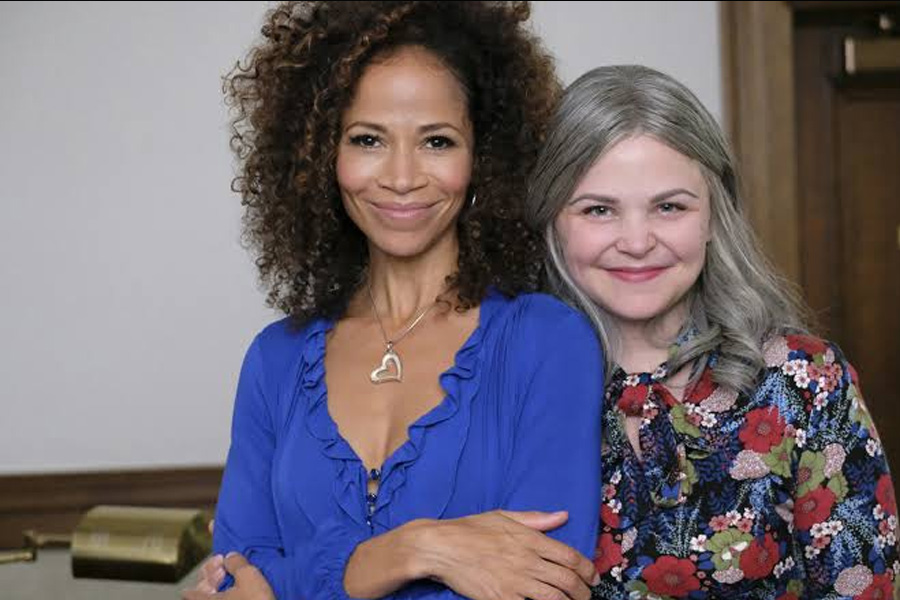
The story reached an even broader audience through the 2019 Lifetime film I Am Somebody’s Child: The Regina Louise Story.
Ginnifer Goodwin portrayed Jeanne Kerr, while Regina’s story was adapted for television from the experiences described in her memoirs.
The film introduced Jeanne’s story to viewers who might never have encountered the memoirs. Yet even as interest increased, Jeanne remained comparatively private.
That contrast is striking.
Regina became a public advocate, author, speaker, coach, and voice for children affected by foster care. Jeanne remained largely outside the spotlight, allowing the story to speak for itself.
A Family Built Across Time
Because it was developed gradually, the Kerr Taylor family tale is unique.
A teen and a counselor first developed an emotional bond.
Then there was an adoption effort.
Next, separation.
Then decades of living on one’s own.
Next, a reunion.
A bond that had endured all those years was finally given legal legitimacy through an adult adoption.
Each member of the family—Jeanne, her husband, Christopher, Regina, Michael, and Stevie Anne—has a distinct role in the narrative.
It’s not a traditional route to family that unites them. It’s perseverance.
Family can also start as a choice long before it becomes a legal status, as demonstrated by Jeanne’s relationship with Regina. Decades later, the documentation arrived. First came the emotion.
Frequently Asked Questions
Who is Jeanne Kerr Taylor?
Jeanne Kerr Taylor is the adoptive mother of Regina Louise Kerr Taylor. She first met Regina while working as a counselor at the Edgar Children’s Shelter in Martinez, California, during the 1970s. She attempted to adopt Regina when Regina was a teenager, but the adoption was denied. The two reunited decades later, and Jeanne legally adopted Regina as an adult in 2003.
When did Jeanne Kerr Taylor adopt Regina Louise?
Jeanne Kerr Taylor legally adopted Regina Louise on November 20, 2003. Regina was 41 years old, while Jeanne was approximately 59.
Why was Jeanne’s original adoption attempt denied?
The original adoption attempt took place in an era when transracial adoption was highly controversial. Regina was Black and Jeanne was white. Contemporary child welfare policies and attitudes concerning race played a significant role, alongside other judgments made about Jeanne’s suitability.
Who is Christopher Taylor?
Christopher Taylor is Jeanne Kerr Taylor’s biological son. He was approximately 23 years old when Jeanne adopted Regina as an adult in 2003. Christopher attended the adoption hearing and became part of Regina’s expanded family.
Who is Jeanne Kerr Taylor’s husband?
Jeanne’s husband is a military serviceman whose personal details have largely remained private. He supported the adult adoption and was present at the 2003 court hearing.
Who is Michael in the Kerr Taylor family?
Michael is Regina Louise’s son and Jeanne’s grandson by adoption. He was approximately 17 when Jeanne legally adopted Regina in 2003 and was present during the court proceedings.
What happened to Jeanne and Regina after the adoption?
Jeanne and Regina remained close after the adoption and lived near one another in the Bay Area for periods of time. They shared holidays and family experiences and maintained the mother-daughter relationship that had begun when Regina was a teenager.
What books did Regina Louise write about her life?
Regina Louise’s two principal memoirs are Somebody’s Someone, published in 2003, and Someone Has Led This Child to Believe: A Case History of Love, published in 2018. Both explore her experiences in foster care, her search for belonging, and her relationship with Jeanne.
How did Regina Louise find Jeanne again?
After the publication of Somebody’s Someone in 2003, a former coworker recognized details in Regina’s memoir and helped locate Jeanne. Jeanne was living in Alabama at the time. They reconnected through email and telephone conversations before meeting in person.
Is Jeanne Kerr Taylor active on social media?
Jeanne Kerr Taylor has maintained a low public profile, and there is limited reliable information about an active public social media presence. Most public references to her come through Regina Louise’s memoirs, interviews, media coverage, and accounts of their family story.
What is Jeanne Kerr Taylor best known for?
Jeanne Kerr Taylor is best known for her enduring relationship with Regina Louise. Her decision to advocate for Regina as a teenager, her unsuccessful attempt to adopt her, and their eventual reunion and adult adoption form one of the central stories in Regina’s life and public work.