Basic Information
| Field | Detail |
|---|---|
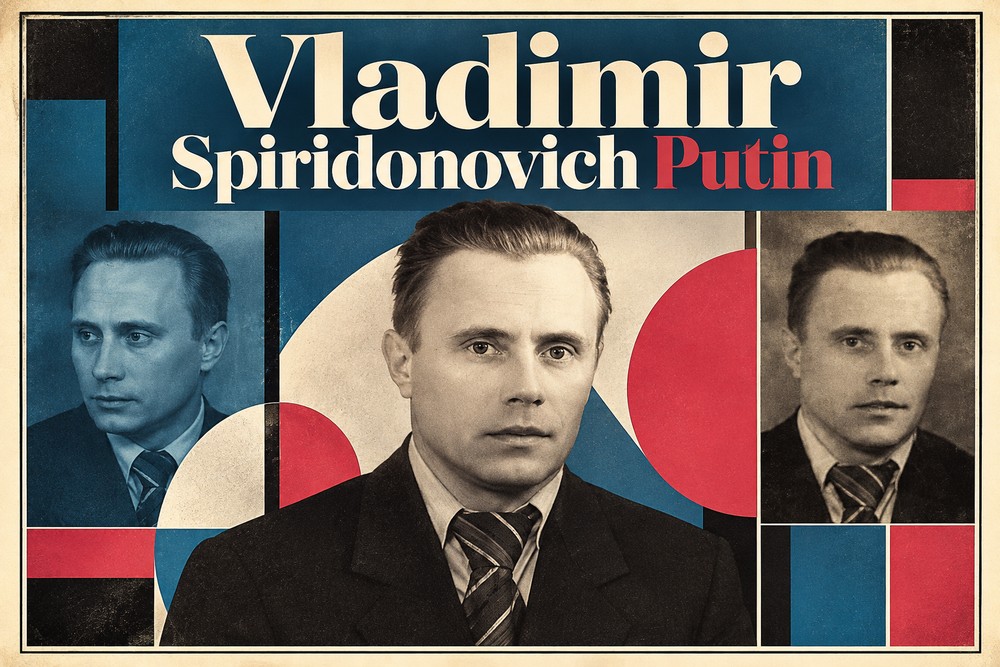
| Full name | Vladimir Spiridonovich Putin |
| Lifespan | 1911–1999 |
| Birthplace | Saint Petersburg, Russian Empire (later Petrograd/Leningrad) |
| Citizenship | Soviet |
| Known for | Father of Vladimir Vladimirovich Putin; WWII-era service; postwar industrial and security work |
| Parents | Spiridon Ivanovich Putin (1879–1965); Olga Ivanovna Putina |
| Spouse | Maria Ivanovna Shelomova (1911–1998) |
| Children | Albert (died in infancy); Viktor (c. 1940–1942); Vladimir Vladimirovich (born 1952) |
| Occupations | Conscribed sailor; wartime serviceman; factory worker; security/foreman roles |
| Primary residence | Leningrad (now Saint Petersburg), USSR |
Early life and family ground
Vladimir Spiridonovich Putin entered the world in 1911 in the big-boned, bustling city of Saint Petersburg. The streets and courtyards he grew up with would soon change names—Saint Petersburg to Petrograd, then Leningrad—yet the family’s cadence remained the same: work, endurance, duty. His father, Spiridon Ivanovich, was a professional cook whose career, in family memory, brushed against elite households. His mother, Olga Ivanovna, kept the family’s domestic center steady.
This was a working family in a working city. The north’s long winters and factory sirens shaped a temperament: plainspoken, persistent, suspicious of fuss. That ethos stayed with Vladimir Spiridonovich when he entered service and later when he returned to the shop floor.
War and survival
The 1940s tore at the fabric of every Leningrad household. Vladimir Spiridonovich served in the Soviet armed forces during the Second World War. Accounts describe him as wounded in the brutal early phase of the war around 1941, part of the same crucible that nearly crushed Leningrad. In those years, survival was its own kind of rank. Soldiers, workers, and families endured together, hunger and cold as relentless as any foe.
The war left marks on both city and man: in the rebuilt streets, the missing names in family albums, and the quiet dignity with which many veterans returned to ordinary life. Vladimir Spiridonovich was one of them—no trumpets, just the steady rhythm of postwar labor.
Postwar work and home
After the victory, he came back to Leningrad, finding his place among machinists, guards, and foremen in the city’s industrial arteries. He was not a man of show, but of shifts. Factory whistles punctuated his days; the practicalities of food, heat, and household repairs filled his evenings. It was a modest life with the classic postwar Soviet palette: ration cards fading into memory, repaired coats, and the stubborn hope that the next generation would step further than the last.
He married Maria Ivanovna Shelomova, born the same year as he—1911. Together they forged a family that knew both loss and resilience. Two sons, Albert and Viktor, died young, the latter during the siege years. In 1952 their third son was born: Vladimir Vladimirovich, whose name would one day stretch across headlines, even as his parents preferred to stand outside the spotlight’s glare.
The household legacy
The Putin family story is sometimes framed around the grandfather’s cook’s cap and the son’s presidential sash, but Vladimir Spiridonovich’s thread is the quiet weft between them. He represents the unglamorous majority who rebuilt a city and set a table with what they had, who counted wages, patched walls, and taught by example. If family histories are quilts, his square is plain cloth—durable, essential, and stitched into everything around it.
Immediate family at a glance
| Name | Relation | Lifespan | Notable details |
|---|---|---|---|
| Spiridon Ivanovich Putin | Father | 1879–1965 | Professional cook; remembered in family accounts for service in elite households |
| Olga Ivanovna Putina | Mother | — | Paternal grandmother of Vladimir Vladimirovich; kept the household core |
| Maria Ivanovna Shelomova | Spouse | 1911–1998 | Mother of three; shared the hardships of war and postwar austerity |
| Albert Putin | Son | — | Died in infancy |
| Viktor Putin | Son | c. 1940–1942 | Died during the siege years, a wartime loss felt for life |
| Vladimir Vladimirovich Putin | Son | 1952– | Entered public life; his parents’ names appear in nearly every profile of him |
Dates and mileposts
- 1911: Birth in Saint Petersburg, then capital of the Russian Empire.
- Early 1930s: Conscription and service in the Soviet Navy-era forces.
- 1941–1945: Wartime service; wounded during the catastrophic early phase of the Eastern Front.
- Late 1940s–1960s: Return to civilian life in Leningrad; factory and security posts.
- 1952: Birth of his son, Vladimir Vladimirovich.
- 1998: Death of his wife, Maria Ivanovna.
- 1999: Death of Vladimir Spiridonovich, closing an 88-year arc shaped by three city names and two eras.
Work, character, and the city that made them
What does a man’s work say about him? For Vladimir Spiridonovich it spoke in steel filings and night shifts, in quiet reliability that his family could plan around. He did not chase titles. He saw the value in showing up, day after day. Leningrad, with its shipyards and factories, shaped men like him. The city’s bone-deep pragmatism—make do, keep moving, help your neighbor—was the operating system of his life.
He and Maria passed that code to their surviving son: a sense that history is built not only by leaders but by the people who repair the bridges and stoke the furnaces. In that sense, their household was a small republic of duty, a place where the future was paid for in rubles, hours, and patience.
A family story in three generations
Three generations form a simple, sturdy arc. Spiridon, the grandfather, learned to serve in kitchens where precision and discretion mattered. Vladimir Spiridonovich, the son, learned to serve in uniform and on the factory floor, where teamwork and endurance carried the day. Vladimir Vladimirovich, the grandson, learned to serve the state in a different register. Across those lives, the constant was work—quiet, ordered, sometimes perilous, often unheralded. The family did not choose the theater of world events; it surrounded them.
A modest ledger: numbers that frame a life
- 1 working city: Leningrad/Saint Petersburg, cradle and home.
- 2 world wars touching the family’s century—one in their parents’ youth, one in their own.
- 3 sons, one surviving to adulthood.
- 88 years from cradle to grave, the span of a turbulent century.
- Uncounted shifts, repairs, and small sacrifices that kept a household steady.
FAQ
Who were Vladimir Spiridonovich Putin’s parents?
His parents were Spiridon Ivanovich Putin and Olga Ivanovna Putina.
Did Vladimir Spiridonovich Putin serve in World War II?
Yes; he served in the Soviet armed forces during the war and is reported to have been wounded in the early phase of the conflict.
What did he do after the war?
He returned to civilian life in Leningrad, working in industrial and security roles typical of the city’s postwar economy.
How many children did he have?
Three: Albert (died in infancy), Viktor (died during the siege years), and Vladimir Vladimirovich (born 1952).
Who was his spouse?
He was married to Maria Ivanovna Shelomova (1911–1998).
Where did he live most of his life?
In Leningrad (now Saint Petersburg), within the orbit of its factories and working neighborhoods.
What is he mainly known for today?
As the father of Vladimir Vladimirovich Putin and as a representative of the wartime generation who rebuilt their city afterward.
When did he die?
He died in 1999, closing a life that spanned imperial, Soviet, and post-Soviet chapters of his city’s history.