A Roosevelt Born Into History
I think of Haven Clark Roosevelt as a man born with history already moving around him like weather. He entered the world on 5 June 1940 in Boston, Massachusetts, inside one of America’s most recognizable family lines. His name carries the weight of the Roosevelt legacy, but it also has its own quiet gravity. Haven is not just a footnote in a famous dynasty. He is a human bridge between generations, a grandson, a husband, a father, and a figure tied to law, preservation, and family continuity.
From the beginning, his life sat at the intersection of public memory and private household reality. The Roosevelt name can feel monumental, like a stone façade built for presidents, reformers, and public service. Yet Haven’s story is also intimate. It moves through birthdays, marriages, children, and the steady hand of family life. That blend gives his biography a particular texture. It is not loud. It is layered.
His Parents and the Home He Came From
Haven Clark Roosevelt was the son of John Aspinwall Roosevelt II and Anne Lindsay Clark. That pairing placed him in two connected family histories, both of them prominent in their own way. On his father’s side stood the Roosevelt line, with Franklin D. Roosevelt and Eleanor Roosevelt as grandparents whose names still ring across American history. On his mother’s side stood the Clark family, including Franklin Haven Clark and Frances Sturgis, adding another branch of social and familial distinction.
I see that family structure as a map with many roads feeding into one estate. John Aspinwall Roosevelt II was not a distant shadow in the background. He appears in family accounts as a businessman and philanthropist, a man whose life included Navy service during World War II and later work in business and finance. Anne Lindsay Clark likewise belonged to a family line that carried its own historical depth. Together, they gave Haven a childhood shaped by privilege, expectation, and the complicated blend of public recognition and domestic privacy.
The Roosevelt family tree can sometimes feel like a great hall full of portraits. But every portrait hides a room. Haven’s parents were the doorway to his room.
Brothers, Sisters, and the Texture of Sibling Life
Haven’s siblings add to his story since family life in a large, well-documented household is never background noise. This produces rhythm. It builds rivalry, love, memory, and identity.
Haven had a newborn sibling who died in 1939 before his birth. The family record silently records that loss, but it matters. It reminds me that family histories aren’t just about the living. They also miss.
Haven’s sisters were Anne Sturgis, Sara Delano, and Joan Lindsay Roosevelt. Each Roosevelt name honors previous generations and carries a strong Roosevelt echo. Anne Sturgis Roosevelt married Douglas Sigler Luke Jr. and Nicholas J. Gibson. Sara Delano Roosevelt died in 1960. Later, Joan Lindsay Roosevelt married Peter Lasher Schoonmaker and lived until 1997.
I see these sibling lines as branches from the same tree, sprouting in separate directions but sharing a root structure. Siblings in this family typically become buddies and continuity markers. Their marriages create new families and carry the family name.
Marriage, Children, and the Next Generation
Haven Clark Roosevelt married Hetty Archer Knowlton on 26 November 1966. That date marks a turning point, the moment where inherited history became chosen partnership. Marriage in a family like this is not just a personal milestone. It is also a weaving of households, values, and future generations.
Together, they had four children: Sara Delano Roosevelt, Wendy Clark Roosevelt, Nina Archer Roosevelt, and Cristina Knowlton Roosevelt. Their names reflect both family memory and affectionate continuity. I notice the repetition of names as a kind of inheritance in itself. Sara Delano reaches back to the Roosevelt line. Wendy Clark carries the Clark branch. Nina Archer and Cristina Knowlton extend the family story through maternal and personal ties. In this way, names become small vessels, each carrying a piece of ancestry forward.
A family like this does not move in straight lines. It spreads like light through cut glass, splitting into facets while still belonging to the same source.
Career, Work, and the Public Record
Public information about Haven’s career is limited, but the clearest label associated with him is attorney and preservationist, based in Dartmouth, Massachusetts. That description matters because it gives him a professional identity that is more than ceremonial. An attorney works with structure, language, and judgment. A preservationist protects memory, place, and inherited form. Those two roles fit neatly together.
I think of preservation as the art of refusing to let time erase everything. It is a steady craft, like repairing a historic wall stone by stone before the whole structure turns to dust. If Haven’s professional life centered on law and preservation, then he appears to have lived in service of both order and memory. That is a fitting path for someone born into a family where the past is always close at hand.
There is little public detail about earnings or financial records tied specifically to him. The available material does not build a portrait of wealth so much as a portrait of lineage, profession, and family stewardship. In a family famous for power, that distinction is important. Not everything valuable is quantified.
Public Mentions and the Shape of His Reputation
Haven Clark Roosevelt appears infrequently in current headlines. Instead, family archives, historical captions, genealogy data, and occasional references mention him. I can learn from that pattern. He belongs to family memories rather than celebrity.
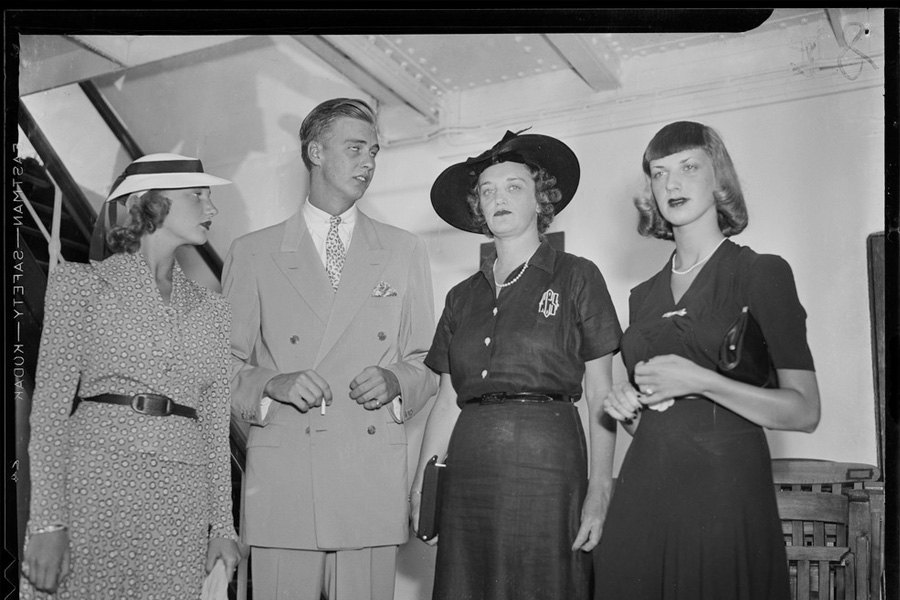
Childhood archive mentions are very interesting. They depict him as a child in the Roosevelt household in the 1940s, where public and private life were inextricably linked. Later allusions portray him as part of the living Roosevelt line and as a preservation and civic memory figure.
That public presence is discreet. Not a flashbulb. An ancient window lamp is burning.
A Timeline of Haven Clark Roosevelt
Here is the arc of his life from the available material:
| Date | Event |
|---|---|
| 5 June 1940 | Born in Boston, Massachusetts |
| 1941 | Appears in Eleanor Roosevelt’s family references |
| 24 December 1943 | Named in an official family Christmas image context |
| 1956 | Appears in a family photo context with Eleanor Roosevelt in Copenhagen |
| 26 November 1966 | Married Hetty Archer Knowlton |
| 9 February 1968 | Daughter Sara Delano Roosevelt born |
| 19 May 1970 | Daughter Wendy Clark Roosevelt born |
This timeline is compact, but it sketches the outline of a life that moved from presidential lineage into adult family formation and, likely, a professional identity rooted in law and preservation.
FAQ
Who was Haven Clark Roosevelt?
Haven Clark Roosevelt was an American member of the Roosevelt family, born on 5 June 1940 in Boston, Massachusetts. He was the son of John Aspinwall Roosevelt II and Anne Lindsay Clark, and he was the grandson of Franklin D. Roosevelt and Eleanor Roosevelt.
Who were his closest family members?
His parents were John Aspinwall Roosevelt II and Anne Lindsay Clark. His siblings included Anne Sturgis Roosevelt, Sara Delano Roosevelt, and Joan Lindsay Roosevelt, along with an infant brother who died in 1939. He married Hetty Archer Knowlton and had four children: Sara Delano Roosevelt, Wendy Clark Roosevelt, Nina Archer Roosevelt, and Cristina Knowlton Roosevelt.
What did Haven Clark Roosevelt do for work?
The clearest public description identifies him as an attorney and preservationist in Dartmouth, Massachusetts. That suggests a life shaped by legal work and the protection of historic or civic places.
Was Haven Clark Roosevelt connected to Franklin D. Roosevelt?
Yes. He was Franklin D. Roosevelt’s grandson and part of the broader Roosevelt family line that includes Eleanor Roosevelt as well.
Why does his name appear in family history material?
His name appears because he belongs to a prominent American family whose records, photographs, and genealogical traces have been preserved across generations. He is part of the living continuation of that family story, not just a historical reference point.